Amiga S-Video
Some time I bought Amiga 500. It was mostly working. It turned out it needed CIA replacement (it got IRQ line stuck low permanently) and floppy cleanup and disk present switch de-oxidized. But to do all that I needed to connect it to some monitor to see what I am doing and most importantly what Amiga is doing. For troubleshooting the black and white, stock video output was enough but once fixed I wanted some color!
This is my first Amiga but I know there are well known solutions to that. But they suffer from being more expensive than Amiga itself (my Amiga was 65€) or requiring custom plugs like 23 pin video connector. (or both).
My 1st idea was to just build A520HD video adapter. But since I was building it from scratch I thought I’ll make an internal version.
Then I though I wanted SVideo more - my 4/3 monitor does not have component input. Common solution seems to use Sony CXA1145 chip from A600 but it is unavailable (I think) and it requires an external delay line.
I went with more modern AD724 instead which is much simpler. Designed and made a board:
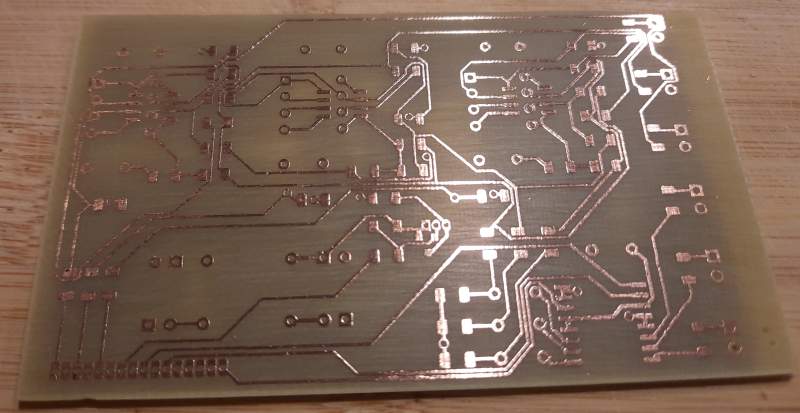
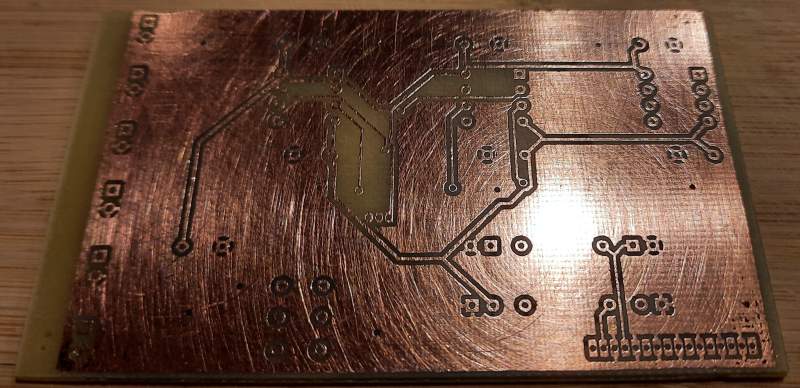
I don’t have the schematics from that time - never thought to publish it…
Anyway - it didn’t obviously work. I naively assumed that DENISE pin 18 called “burst” on the schematics will output PAL 4.433MHz color burst. So it doesn’t. :)
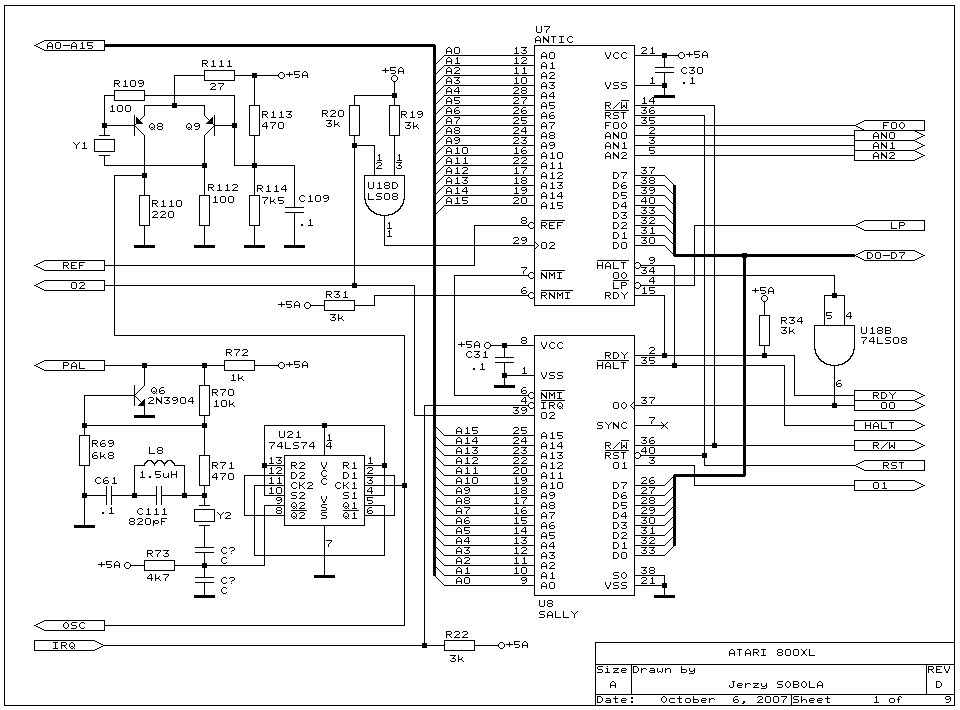
Turnes out the same people who made Atari 800 worked on Amiga and did it the same way. So burst is “base clock” / 8: 28.37512MHz / 8 = 3.54689MHz which is 4/5 of the required frequency.
Hmmm Atari… Let’s borrow colorburst from Atari then:
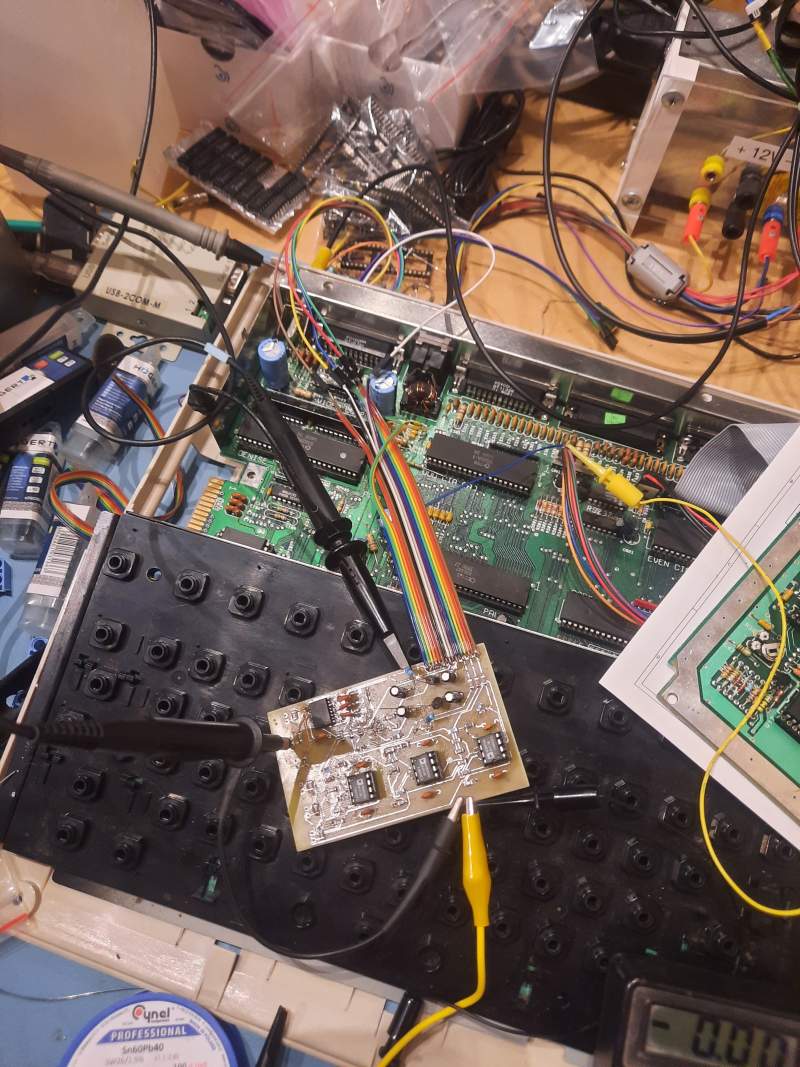
And it kind-of worked:
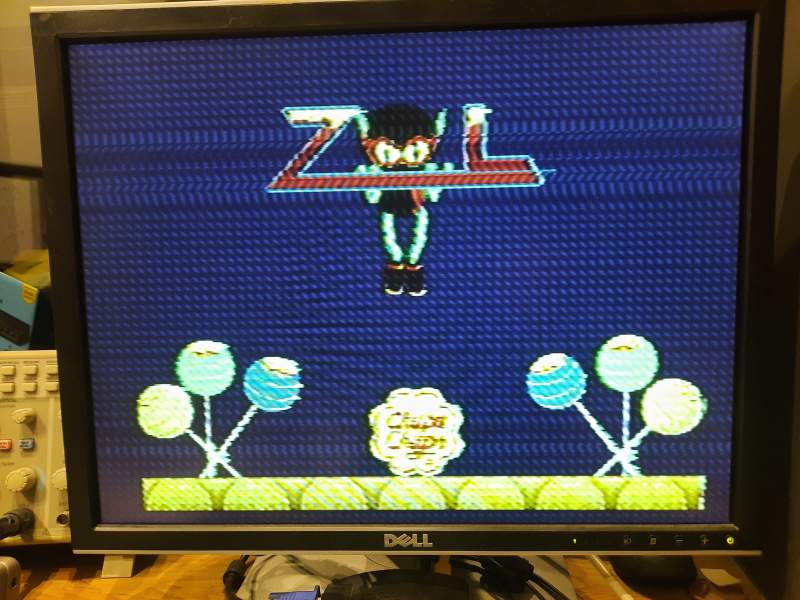
Hardly ideal…I need to move PAL clock to my board and colors are off…
The colors issue was somebody mixed op-amp legs… and most of distortion is gone once we have own clock.:
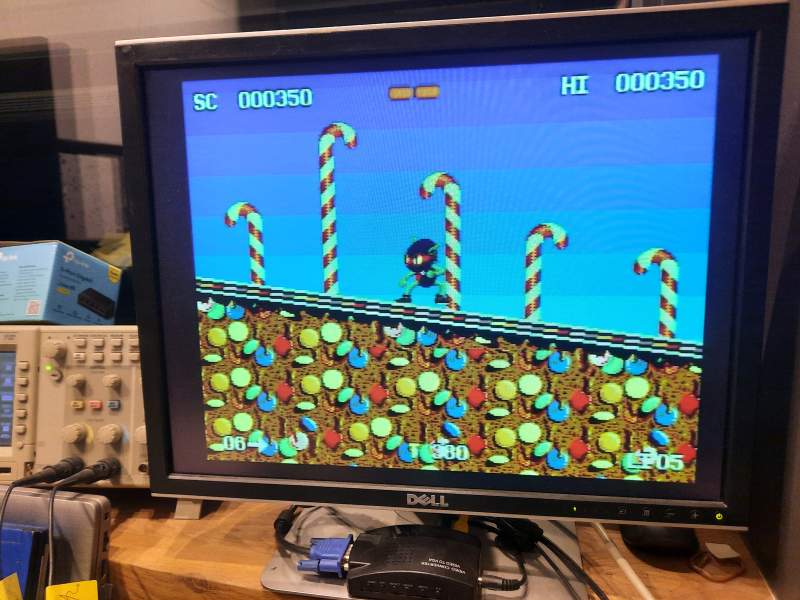
Not ideal but promising. The board looks bad now though:
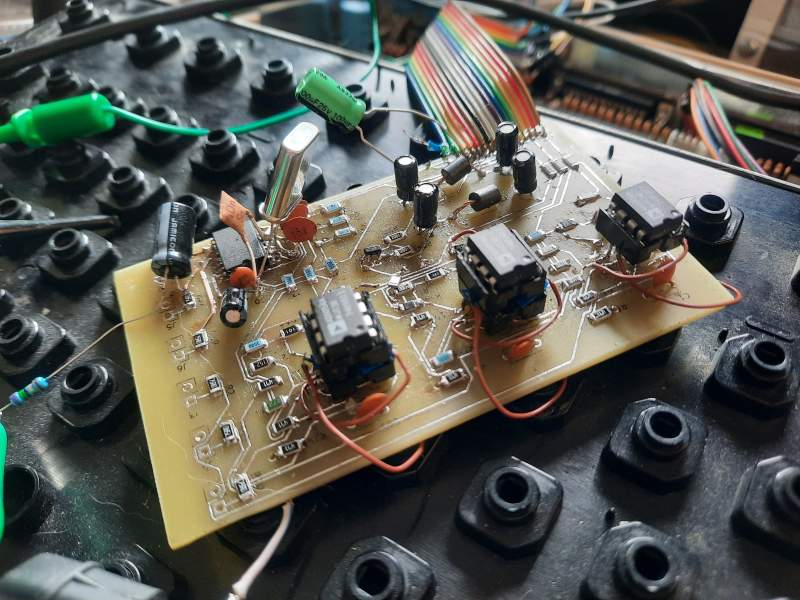
The issues:
- New board needed - this one served well as a prototype but it is not reliable at all.
- PAL clock is not synchronized to pixel clock - there was visible moving artefacts on the pixels edges.
- Still a lot of noise
I decided to re-do the schematics, add A600 /4*5 clock circuit (almost identical as in Atari) and order board from PCB manufacturer.
Sooooo 2years have passed. I did other things :) But finally:
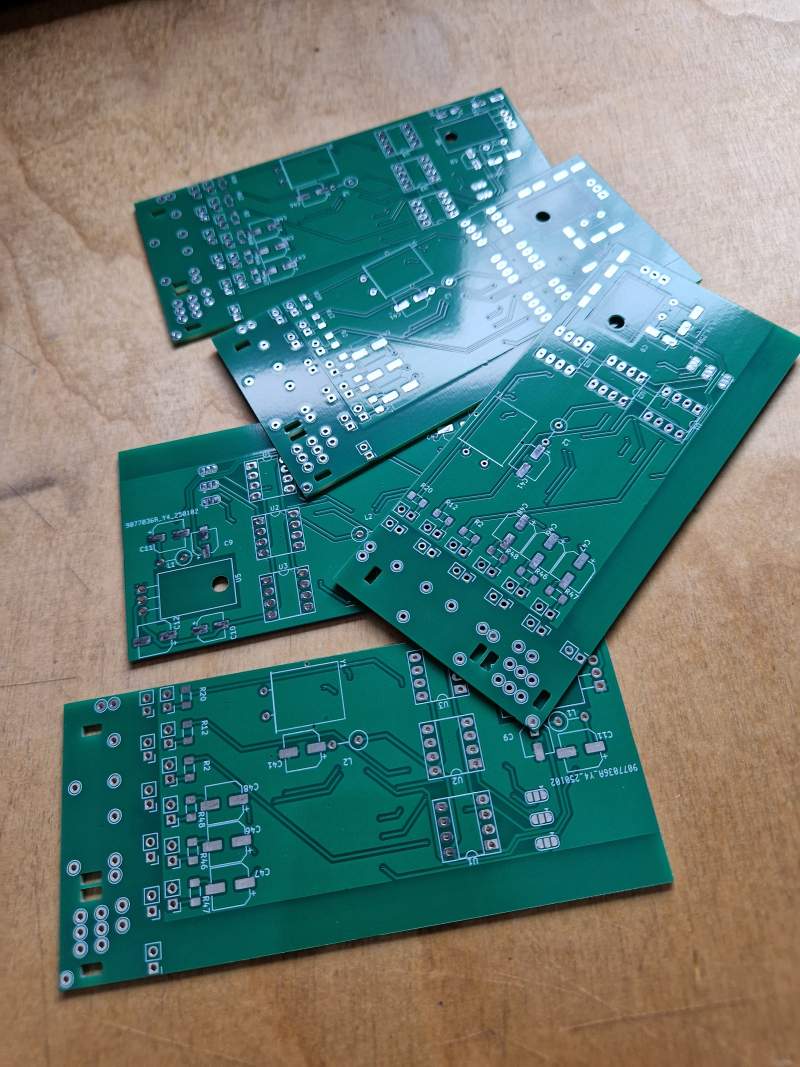
With some more fixes - I made a mistake and swapped R and B AD724 inputs and also replacing input cables with coaxial grounded at input - the image quality is great.
So here it is at GitHub. Fixes are not there yet but maybe sometime ;)
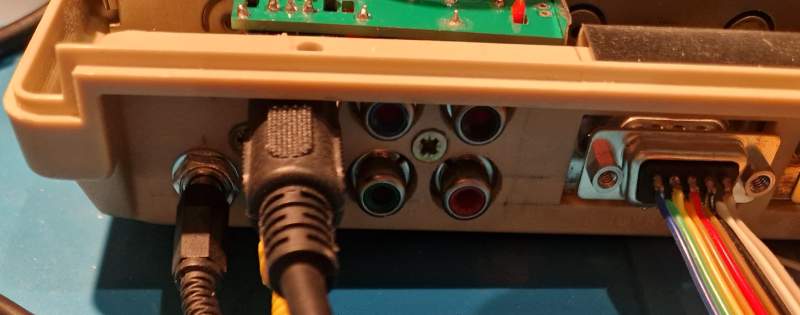
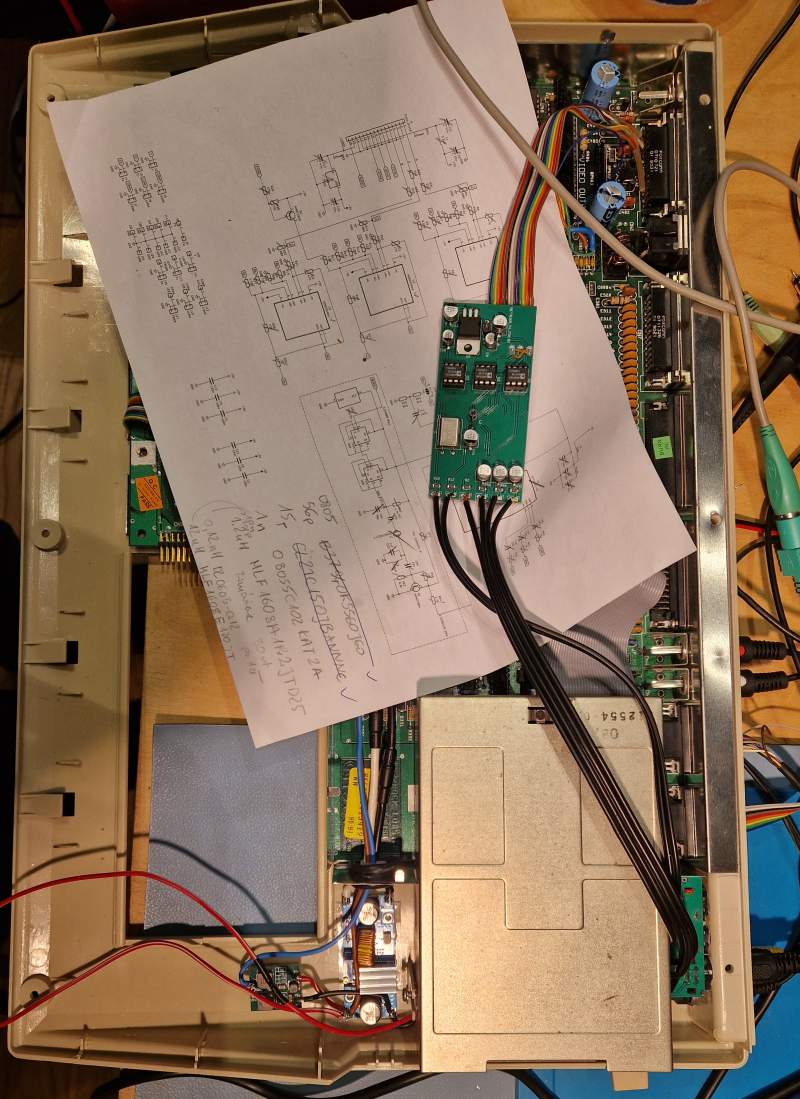 an eagle eye can spot external PSU replaced with 2 internal boards and 12V input next to new video output.
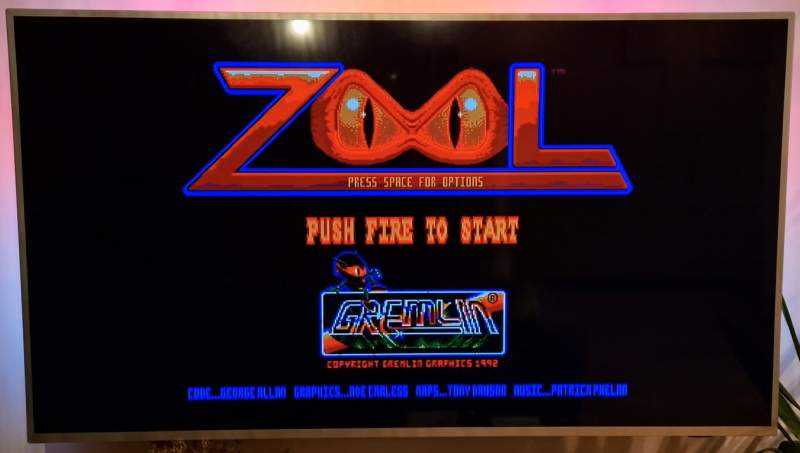
The image finally looks great over s-video:
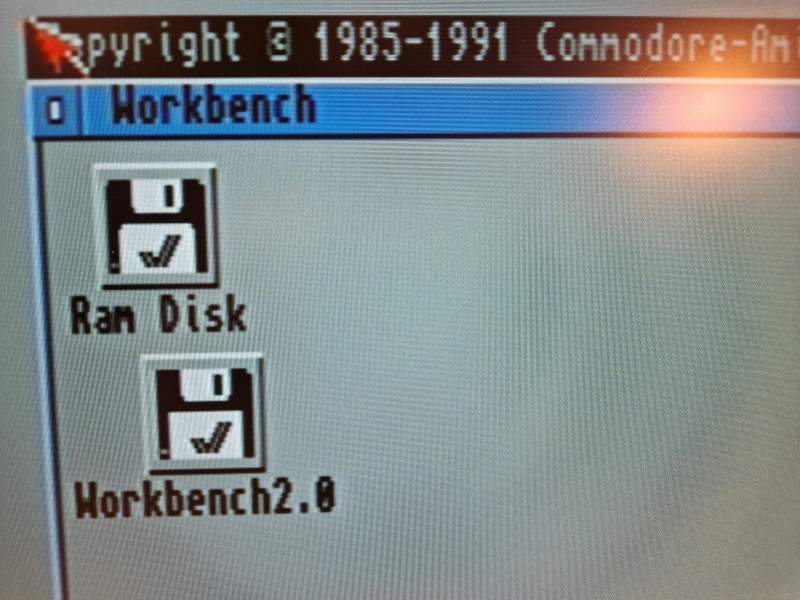
And even beter over component although TV makes it darker and little over-saturated. This does not happen on a monitor with component input.
References:
- The project: GitHub
- A520HD project: A520HD
- AD724 datasheet: AD724.pdf; source
- Amiga 500 Board Rev. 6: A500_R6.pdf; source
- Amiga 600 Board Rev. 1.5: A600_R1.5.pdf; source
- Atari 800XL: 800xl_01.gif; source